Rubio's Three-Phase Venezuela Plan: Clarity Amidst Trump's Ambiguity
The political landscape surrounding Venezuela has been a whirlwind of dramatic events and strategic maneuvers, none more impactful recently than the capture of Nicolás Maduro. Yet, in the wake of such a significant tactical success, a perplexing void of clarity has emerged regarding the future trajectory of U.S. involvement and Venezuela’s path forward. President Donald Trump, while consistent in his stated intention to control Venezuela’s vast oil resources, has offered a complex and often contradictory vision for the nation. His willingness to work with figures like interim President Delcy Rodríguez, a longtime Chavista, alongside a meeting with opposition leader María Corina Machado, has left observers and stakeholders grappling with an elusive trump venezuela strategy.
Amidst this strategic opacity, one figure has stepped forward to articulate a more structured and comprehensive approach: Secretary of State Marco Rubio. Outlining a detailed three-phase plan—stabilization, recovery, and transition—Rubio has attempted to provide a much-needed blueprint for post-Maduro Venezuela, offering a stark contrast to the often improvisational and transaction-focused posture of the Trump administration. This detailed framework not only offers a potential pathway for Venezuela but also sheds light on the broader objectives that underpin U.S. foreign policy in the Western Hemisphere.
The Unclear Horizon: Decoding Trump's Venezuela Strategy Post-Maduro
More than a month after Operation Absolute Resolve led to Maduro's capture, the specifics of President Trump’s long-term plan for Venezuela remain largely undefined. While the U.S. naval deployment in the Caribbean Sea remains a potent symbol of American presence, the broader policy in practice appears singularly focused on asserting control over Venezuela’s oil sales on the open market. Trump's consistent emphasis on controlling oil, coupled with his indication that proceeds would be split between the United States and Venezuela, suggests an economically driven agenda that, at times, seems to overshadow broader democratic or stability goals.
The mixed signals from the administration have only compounded this ambiguity. On one hand, Trump met with and honored opposition leader María Corina Machado, signaling a nod to democratic forces. On the other, he has appeared comfortable with the idea of working with the existing corrupt military leadership and even the _collectivos_, implying a readiness to engage with elements previously seen as obstacles to democracy. This creates a challenging environment for assessing the overarching trump venezuela strategy, leaving allies, adversaries, and the Venezuelan people in the dark about the path forward. For a deeper dive into the challenges and implications of this approach, you can read more at Trump's Venezuela Strategy: A Murky Path to Oil Control.
Rubio's Blueprint: A Three-Phase Path for Venezuela's Future
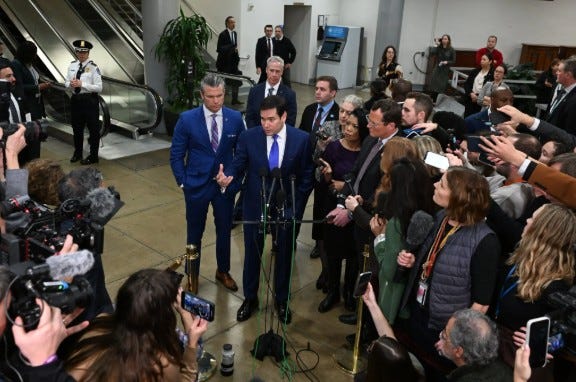
In contrast to the ambiguity emanating from the White House, Secretary Marco Rubio presented a clear, phased approach to the Senate Foreign Relations Committee on January 28, offering what he described as the Trump administration's three-phase plan: stabilization, recovery, and transition. This framework provides a welcome measure of clarity, detailing specific actions and objectives for each stage, aiming to move beyond immediate tactical successes towards a more enduring resolution for Venezuela.
Phase 1: Stabilization – Securing the Economic Foundations
The initial phase outlined by Rubio, stabilization, zeroes in on Venezuela's most immediate and potent asset: its oil. The core objective here is to establish a long-term mechanism that allows sanctioned Venezuelan oil to be sold at market prices. In the short term, Rubio detailed a specific payment system: oil proceeds would flow into Venezuelan accounts held in Qatar. This move aims to ensure that the revenue generated from Venezuela's primary resource is managed in a controlled and potentially less corruptible manner. However, it's worth noting the initial dissonance with President Trump's earlier statements about the U.S. and Venezuela splitting these oil proceeds, highlighting an area where policy communication could be better aligned.
Practical Tip: For stabilization to truly take hold, the transparency of these financial mechanisms is paramount. International oversight and independent audits of the Qatari accounts would be crucial to build trust, prevent illicit siphoning of funds, and ensure that oil revenues genuinely serve the Venezuelan people. This phase is not just about selling oil; it's about re-establishing the foundations of a functioning, accountable economy.
Phase 2: Recovery – Rebuilding Institutions and Influence
Following stabilization, the recovery phase broadens the scope to encompass political, economic, and geopolitical transformations. Rubio emphasized several key objectives:
- Releasing Political Prisoners: A critical step towards political normalization, though efforts here have been mixed. While some political prisoners have been released, many more remain incarcerated, underscoring the ongoing challenge.
- Normalizing Venezuela's Oil Industry: This involves reforming the industry through new laws and regulations, aiming to make it more efficient, attractive to international investment, and less susceptible to the corruption that plagued the Maduro regime. Partial progress has been made with new oil industry laws being approved.
- Creating Space for Diverse Political Voices: A crucial element for any future democratic transition, allowing for open dialogue and participation from all segments of Venezuelan society. This remains a significant hurdle, as a clear path for a fully democratic system is not yet established.
Beyond internal reforms, Rubio also stressed the imperative of addressing Venezuela's role in broader regional security. This includes eliminating Venezuela as a base of operations for adversarial nations like China, Iran, and Russia in the Western Hemisphere, curbing rampant drug trafficking, and reducing China’s access to discounted Venezuelan oil. These goals underscore the strategic importance of Venezuela in the U.S. National Security Strategy, aligning the plan with efforts to bolster America's influence and stabilize the region.
Practical Tip: Success in the recovery phase hinges on sustained diplomatic pressure and international cooperation. Engaging regional allies and international bodies to monitor human rights, facilitate political dialogue, and support institutional reforms will be essential. Building a broad consensus for these changes can help insulate them from future political shifts.
Phase 3: Transition – Envisioning a Democratic Venezuela
While the reference context specifically cuts off before fully detailing the transition phase, its inclusion inherently points towards the ultimate objective: moving Venezuela towards a democratic, sovereign, and stable future. Based on standard post-conflict or post-authoritarian frameworks, this phase would likely focus on:
- Establishing Democratic Institutions: This would involve crafting a new constitution, strengthening the rule of law, ensuring an independent judiciary, and reforming security forces to be accountable to a civilian government.
- Fair and Free Elections: The ultimate litmus test for democratic transition, requiring robust electoral bodies, international observation, and safeguards against fraud and intimidation to ensure the legitimacy of results.
- Reconciliation and Justice: Addressing past human rights abuses, promoting national reconciliation, and ensuring accountability for crimes committed under previous regimes, while avoiding a cycle of retribution.
- Economic Diversification and Growth: Moving beyond sole reliance on oil, fostering a diverse economy, and attracting foreign investment to create jobs and improve living standards for all Venezuelans.
This phase represents the most ambitious and challenging, requiring sustained commitment from both the Venezuelan people and the international community. It is a long-term vision that contrasts sharply with any short-term transactional approach focused solely on resource control.
Practical Tip: Civil society engagement is vital during a transition. Supporting independent media, human rights organizations, and community groups can help hold new governments accountable and ensure that the voices of the people are heard throughout the process of rebuilding democracy. International support for electoral transparency and capacity building for new institutions is also paramount.
Beyond Oil: Aligning with Broader U.S. Security Interests
The U.S. capture of Nicolás Maduro, while a dramatic action, was not an isolated event. It echoed intents outlined in the Trump administration’s National Security Strategy (NSS), which places a significant priority on the Western Hemisphere. The NSS outlines a desire to bolster America’s influence, "control migration, stop drug flows, and strengthen stability and security on land and sea." In this light, the actions taken in Caracas, regardless of the immediate policy clarity, align with a broader strategic framework designed to protect U.S. interests and enhance regional security.
Rubio’s detailed plan, therefore, can be seen as an attempt to operationalize these broader NSS principles within the specific context of Venezuela. By addressing the roles of China, Iran, and Russia in the hemisphere, curbing drug trafficking, and stabilizing a volatile nation, the plan aims to achieve more than just oil control; it seeks to reinforce American leadership and mitigate threats close to home. While the tactical action against Maduro might have resonated with certain segments of the Republican base, the underlying principles of the trump venezuela strategy, as articulated through Rubio, align with long-standing U.S. foreign policy goals, even if public opinion on America's broader engagement in the world remains varied. For further details on how these actions fit into the larger security framework, explore Post-Maduro: How Trump's Actions Align With His National Security Strategy.
Conclusion
The aftermath of Nicolás Maduro's capture has laid bare a critical divergence in approaches to Venezuela's future. While President Trump's focus has remained largely on the immediate control of oil resources, often communicated with an unsettling ambiguity, Secretary Marco Rubio has offered a more structured and comprehensive three-phase plan. This framework—stabilization, recovery, and transition—provides a much-needed roadmap that addresses not only economic imperatives but also political reforms, institutional rebuilding, and geopolitical concerns.
Ultimately, the success of any trump venezuela strategy will depend on the clarity, consistency, and sustained commitment behind it. Rubio's plan injects a vital element of strategic foresight, attempting to guide Venezuela towards a future that extends beyond mere resource extraction. For Venezuela to emerge from its prolonged crisis, a coherent, long-term strategy, backed by international consensus and the genuine will for democratic change, will be indispensable for the stability of the nation and the broader region.